

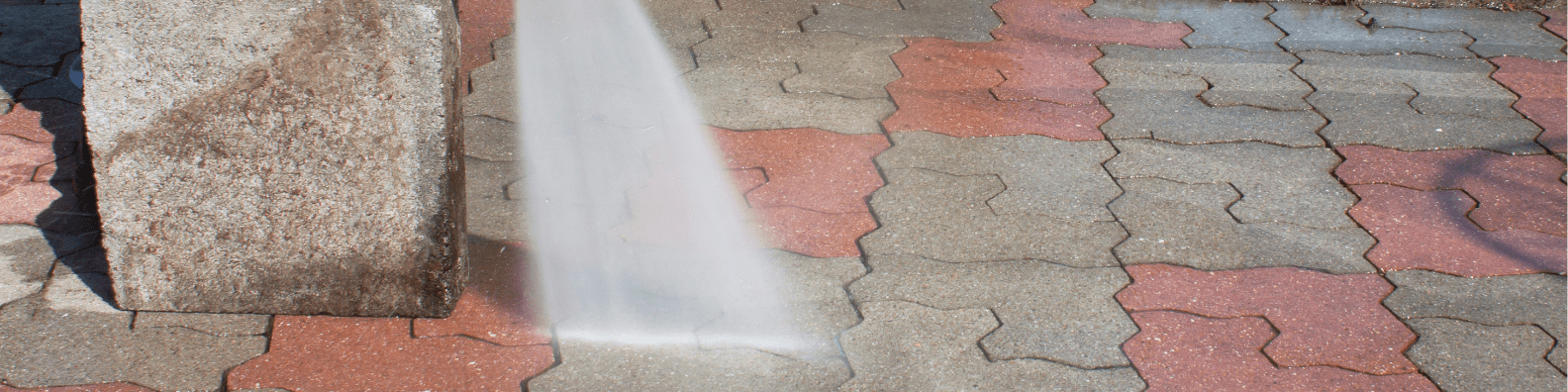
Block paving is one of the most popular surface types used around homes, offices, and public spaces. Over time, it collects moss, algae, dirt, dust, and oil stains. A pressure washer offers a fast and effective cleaning solution – but only if used correctly.
Incorrect pressure or technique can permanently damage the paving. In this article, you’ll learn how to clean block paving safely and properly, what mistakes to avoid, and why they keep happening over and over.

⚠️ Why Block Paving Is Sensitive to Incorrect Cleaning
Most paving blocks are made from vibro-compacted concrete. This makes them strong, but also porous, which means they:
Absorb water
Trap dirt in microstructures
Hold jointing sand between the bricks for stability
Using too much water pressure can:
Wash away the jointing sand
Damage the surface layer of the concrete
Lead to faster recontamination
Cause unevenness or loose blocks
👉 Fact: A damaged surface becomes more absorbent and accelerates moss and algae growth.
❌ Most Common Mistakes When Cleaning Block Paving
1. Using Too Much Pressure
Setting your washer to maximum (e.g. 200+ bar) and blasting the paving directly often results in etched surfaces and washed-out joints.
2. Narrow Nozzle Angle (0° Jet)
A pinpoint stream acts like a water knife – great for steel, terrible for concrete paving.
3. Cleaning Too Close
The closer the nozzle, the higher the impact – and the higher the risk of surface erosion.
4. Skipping Sand Refill
Even gentle cleaning removes some jointing sand. If not replaced, the paving loses structural integrity.

✅ Step-by-Step Guide: How to Pressure Wash Block Paving the Right Way
1️⃣ Choose the Right Pressure
Recommended range: 120–160 bar
Higher pressure only if necessary, and from a greater distance
👉 Tip: More pressure doesn’t mean better results. Technique matters more.
2️⃣ Use the Right Nozzle or Surface Cleaner
Best choices:
25° or 40° nozzle
Or a rotary surface cleaner
Surface cleaners distribute pressure evenly, which:
Protects the surface
Reduces cleaning time
Prevents striping or patchy results
3️⃣ Maintain the Correct Distance
Ideal: 20–30 cm from the surface
Move smoothly – avoid stopping in one spot too long
4️⃣ Clean in a Systematic Pattern
Work in small sections
Move in a consistent direction
Avoid crossing lines or random passes
👉 Uneven cleaning can leave visible shade differences on the paving.
5️⃣ Refill the Jointing Sand
Once dry:
Add dry kiln-dried silica sand
Sweep it thoroughly into joints
Consider using polymeric sand for added durability

🧪 Should You Use Chemicals for Cleaning?
Most dirt can be removed without chemicals. However, for surfaces heavily covered in moss or grease:
Use only concrete-safe cleaners
Avoid harsh acids or chlorine-based products
Always follow dilution instructions on the label
👉 Fact: Overuse of chemicals can degrade concrete and reduce the lifespan of the surface.
🧼 How Often Should You Clean Block Paving?
Once per year for a full clean
Spring or autumn are ideal times
Regularly sweep off leaves, dust, and debris throughout the year
Too frequent high-pressure washing can wear down the surface faster.
✅ Final Takeaway: Less Pressure, More Care
A pressure washer is a powerful tool – but only when used wisely. Your block paving doesn’t need brute force. It needs:
Controlled water pressure
The right nozzle or attachment
Smart technique and attention to detail
If your goal is to:
Keep your paving looking great
Extend its service life
Avoid costly repairs
…then stick to proven methods and avoid common pitfalls.

